One-stop solution for Sheet Metal Fabrication & CNC Machining - Bergek CNC
Language
One-stop solution for Sheet Metal Fabrication & CNC Machining - Bergek CNC
Titanium alloy has been widely used in the aerospace industry because of its high strength, low density, and high corrosion resistance. However, in the process of processing, tool durability is low, thermal conductivity is small, and the sticky knife is serious, which it difficult to process materials.
These titanium machining parts offer high strength, low density, and exceptional corrosion resistance, making them ideal for aerospace applications. With a small elastic modulus and high thermal stability, these parts can withstand high temperatures and harsh environments. The titanium alloy's chemical activity and poor thermal conductivity require precise machining techniques for optimal performance, which is where our expertise in CNC processing technology comes in to ensure accuracy and efficiency in production.
At the core of our Titanium Machining Parts lies an unmatched team strength that sets us apart in the market. With a focus on high strength and low density, our expert team ensures superior quality and precision in every part we produce. Our dedicated engineers and technicians work seamlessly together, leveraging their diverse skills and experience to deliver exceptional results. By harnessing the collective strength of our team, we are able to continually innovate and push the boundaries of what is possible in the machining industry. Choose our Titanium Machining Parts for unrivaled strength and reliability.
Our Titanium Machining Parts boast not only high strength and low density but also the incredible team strength behind them. Our team of expert engineers and machinists work together seamlessly to ensure top-notch quality and precision in every component. With years of experience and a passion for innovation, our team is dedicated to pushing the boundaries of what is possible in the field of titanium machining. This collective expertise and collaborative spirit guarantee that our Titanium Machining Parts are not only durable and lightweight but also cutting-edge and reliable. Trust in our team strength to deliver the best products on the market.
Titanium alloy has been widely used in the aerospace industry because of its high strength, low density, and high corrosion resistance. However, in the process of processing, tool durability is low, thermal conductivity is small, and the sticky knife is serious, which it difficult to process materials.
Through the analysis of titanium alloy thin wall filter cartridge performance, structural characteristics, and design accuracy requirements, the actual production of numerical control processing technology should pay attention to the selection of scientific and reasonable cutting tools and cutting parameters, especially in positioning, clamping, alignment and other aspects of the summed up some experience and matters needing attention. It can solve the problem of machining difficulty caused by the hard cutting property of titanium alloy material to the thin wall filter cylinder and the problem of easy to produce burr in the process of titanium alloy processing. Reasonable numerical control machining technology is the key to ensuring the machining accuracy of titanium alloy thin wall filter cartridges, and it is also the key to improving the machining efficiency and shortening the machining cycle in mass production.
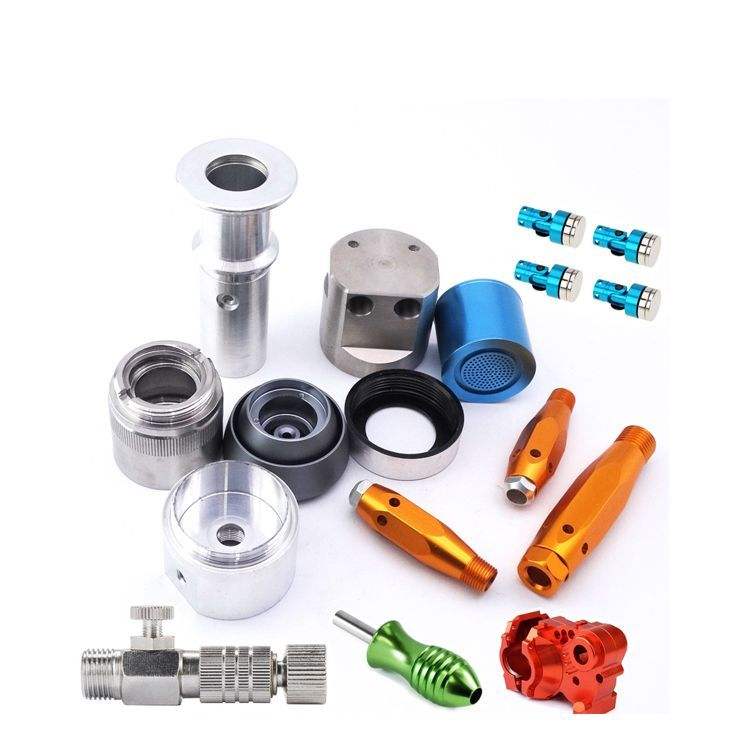
Performance characteristics and application of titanium alloy parts
① Small density, high strength, strength is greater than high strength steel.
(2) Good thermal stability, and high-temperature strength. At 300℃ ~ 500℃ below, its strength is about ten times higher than aluminum alloy.
③ Good corrosion resistance. Titanium alloy works in a moist atmosphere and seawater medium, and its corrosion resistance is much better than that of stainless steel, and it has strong resistance to pitting corrosion, acid corrosion, and stress corrosion. It has excellent corrosion resistance to alkali, chloride, nitric acid, and sulfuric acid.
(4) the chemical activity is large and can produce violent chemical reactions with O, N, H, CO, CO2, and water vapor in the atmosphere. Above 600℃, titanium absorbs oxygen and forms a hardened layer with high hardness. When H content rises, the embrittlement layer will also be formed.
⑤ Poor thermal conductivity. The thermal conductivity of titanium is low, about 1/4 of Ni, 1/5 of Fe, 1/14 of Al, and the thermal conductivity of titanium alloy are lower, generally 50% of titanium.
⑥ Small elastic modulus. The elastic modulus of titanium is 107800MPa, which is about 1/2 of that of steel. In summary, due to the characteristics of small specific gravity, high strength, non-magnetism, corrosion resistance, and high temperature, titanium alloy is widely used in the Marine, aerospace, precision instruments, and other fields of core parts.
At Bergek, we have been focusing on rapid prototyping and mass production for many years, until today we have a number of senior engineers with various technologies to provide professional solutions. More than 50 surface treatment options and more than 60 metal/plastic certified materials can meet different rapid prototyping needs. Bergek maintains long-term relationships with world-class companies in various industries such as medical devices, consumer electronics, automotive, robotics, and aerospace. 7*24 hours one to one quick response, the fastest delivery in 3 days.
Bergek CNC is a world-class manufacturing service provider in Shenzhen. We have advanced equipment to provide a full range of customized products to manufacturers around the world, specializing in CNC machining and sheet metal processing.
If you have any question,please contact us.

Copyright © 2026 SHENZHEN BERGEK TECHNOLOGY CO., LTD. - www.bergekcnc.com All Rights Reserved.