One-stop solution for Sheet Metal Fabrication & CNC Machining - Bergek CNC
Language
One-stop solution for Sheet Metal Fabrication & CNC Machining - Bergek CNC
CNC turning process steps are to analyze drawings, determine the need for processing technology, a reasonable choice of tools, fixture installation, programming, according to the programming of the knife to confirm the number of knife fill, test processing products, confirm the size of the product, after the data can be fully adjusted into mass production.
The Prototype CNC Turning Process delivers precision engineering for creating high-quality products with intricate designs. Our process ensures smooth finishes and accurate measurements, resulting in superior product performance. With quick turnaround times and cost-effective production, our CNC turning process offers a competitive edge in the market.
Our company specializes in providing high-quality CNC turning processes for prototype production. With years of experience and a dedicated team of experts, we are committed to delivering precision parts with fast turnaround times. Our state-of-the-art machinery ensures accuracy and efficiency in every project we undertake. We take pride in our attention to detail and commitment to customer satisfaction. From initial design to final product, we work closely with our clients to ensure their specifications are met and exceeded. Trust us to bring your prototype ideas to life with our top-notch CNC turning services.
Company Profile:
At Prototype CNC, we specialize in providing high-quality CNC turning processes that meet the needs of our customers. With years of experience in the industry, our team of experts is dedicated to delivering precision and efficiency in each project we undertake. Our state-of-the-art equipment and technology allow us to produce top-notch results, ensuring customer satisfaction every time. We take pride in our attention to detail and commitment to excellence, making us a trusted partner for all CNC turning needs. Choose Prototype CNC for reliable and superior machining services that exceed expectations.
CNC turning process steps are to analyze drawings, determine the need for processing technology, a reasonable choice of tools, fixture installation, programming, according to the programming of the knife to confirm the number of knife fill, test processing products, confirm the size of the product, after the data can be fully adjusted into mass production.
Turning is lathe processing, lathe processing is a part of mechanical processing. Lathe processing is mainly used to turn the rotating workpiece turning to a process. In the lathe also available drill, reamer drill, reamer, tap, die, and knurling tools for the corresponding processing.
First, the type of CNC turning parts
The main movement of CNC lathe turning is the rotary movement of the spindle, the type of processing is mainly revolving around body parts. Rotary body parts are divided into three categories: axle sleeve, wheel, and complex contour shape. The difference between the sleeve and disc parts lies in the length-diameter ratio. Generally, the parts with a length-diameter ratio greater than 1 are called sleeve parts. Parts with an aspect ratio less than 1 are called wheel parts
1, CNC lathe processing of the main object
CNC lathe machining precision is high, can make a straight line and arc interpolation, some advanced CNC devices have some non-circular curve interpolation function and in the process of automatic transmission and other characteristics, for the characteristics of CNC lathe, the following parts are most suitable for CNC turning processing
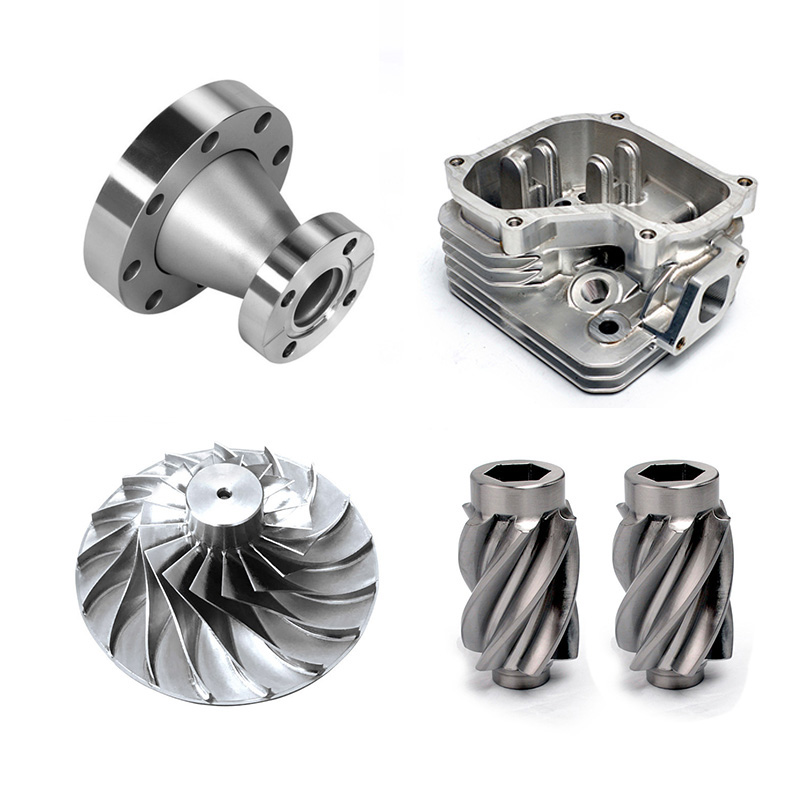
2, high precision rotary parts
CNC lathe can process parts that require higher precision of bus straightness, roundness, and cylindricity. For arcs and other curves, the shape produced is very close to the geometric shape required in the drawing. On some occasions, a car can be substituted for a mill
3. Rotary parts with particularly complex contour shapes
Because CNC lathes have linear and circular interpolation functions, some advanced CNC devices and some non-circular curve interpolation functions, so you can turn by any straight line and plane curve composition of the shape of the complex rotating body parts, and difficult to control the size of the parts such as shell parts with the closed inner forming surface. This is an incomparable advantage of traditional lathes
4, surface roughness requirements of rotary parts
Some CNC lathes have the function of constant linear speed cutting, which can process parts with small and uniform surface roughness. When turning taper and end face on a common lathe, the surface roughness after turning is not consistent because of constant rotation speed. Using the constant linear speed cutting function of the CNC lathe, the optimal linear speed can be selected to cut the cone and end face, so that the machined surface roughness value is small and consistent. Numerical control car
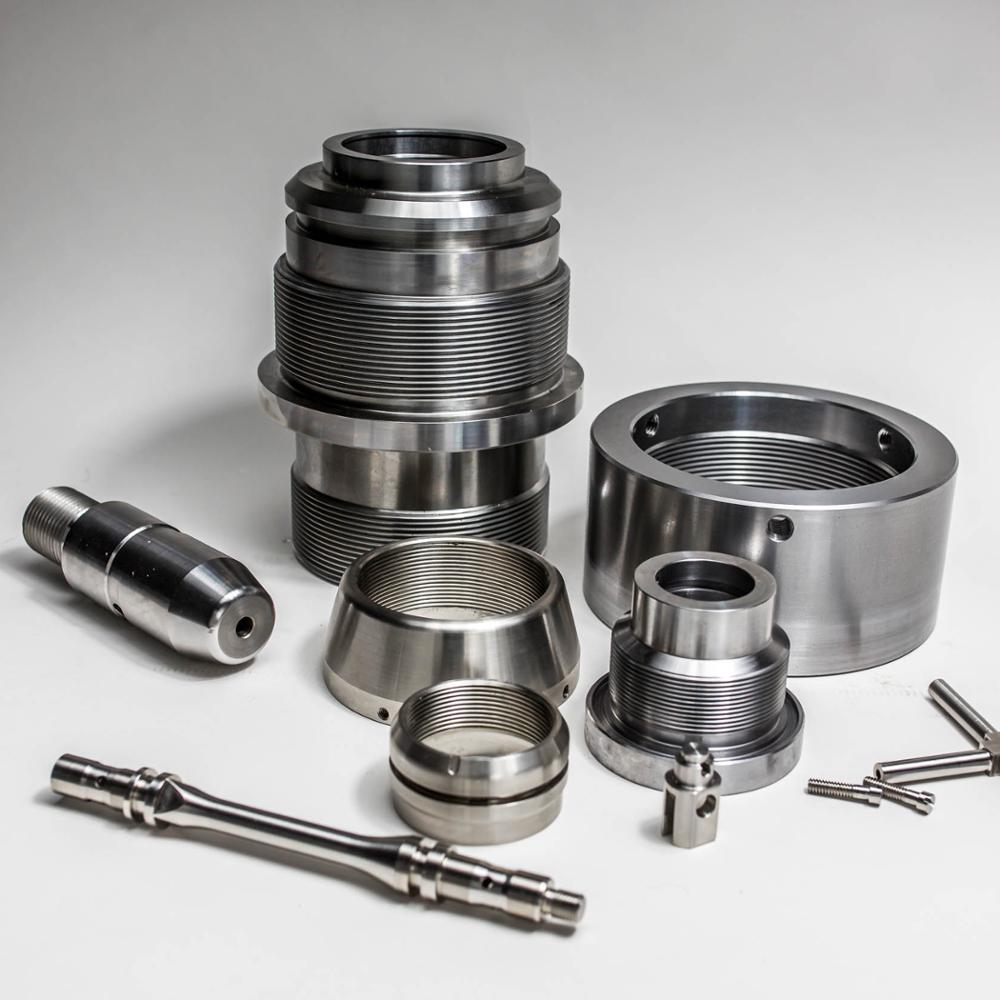
Cutting is also suitable for turning parts with different surface roughness requirements. Roughness value requires large parts to use large feed, and small parts to use small feed.
5. Rotary parts with special threads
CNC lathe can not only turn any equal lead straight, conical thread and end thread, and can increase the load, reduce lead and requirements of equal lead and variable lead smooth transition between the thread, but also can turn high precision modular spiral parts (such as cylindrical, circular worm) and end (disc) spiral parts. CNC lathes can be equipped with precision thread cutting function, the use of cemented carbide forming tools and a high number of revolutions, so the turning out of the thread precision is high, the surface roughness is small
Two, turning process characteristics
Turning processing is mainly used to process a variety of rotary surfaces, that is, the workpiece rotation as the main movement, turning tool for feed movement. Common turning methods are turning inside and outside the circle, turning plane, and turning cone turning thread. According to the choice of turning tool Angle and different cutting amounts, turning can be divided into rough turning, semi-finishing turning, and finishing turning stage. Among them:
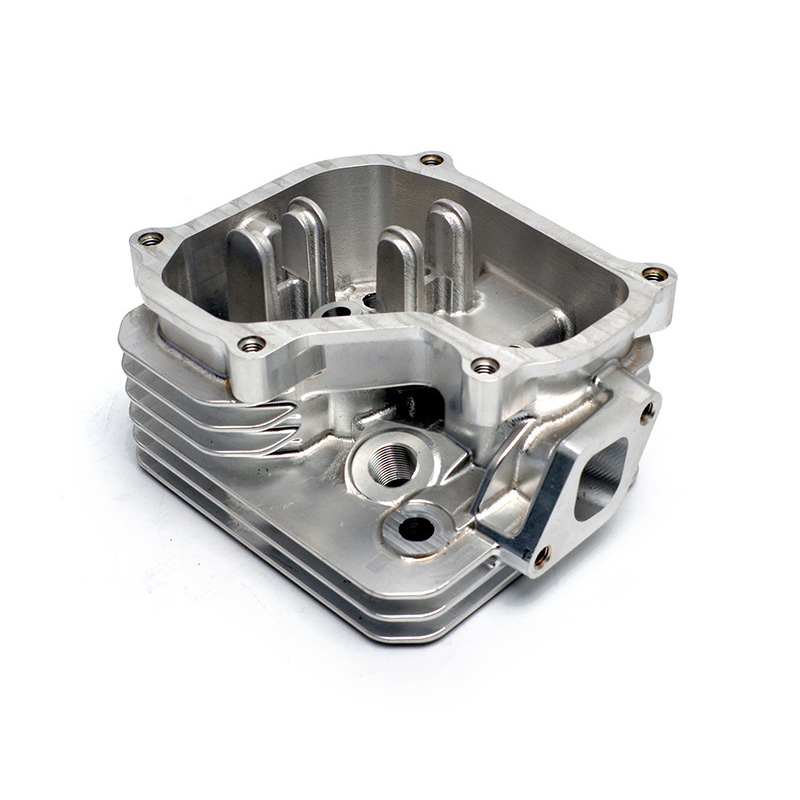
The tolerance grade of the coarse car is IT12~IT11, and the surface roughness Ra is 12.5~25um. The dimension tolerance grade of the semi-finishing car is IT10~1T9, and the surface roughness Ra is 3.26.3um
The dimensional tolerance grade of a fine car is IT8~IT7, and the surface roughness Ra is 0.8~1.6um(non-ferrous metal Ra can reach 0.4~0.8um)
Production speed
CNC turning is faster for boring, drilling, and molding operations. This allows the industrialist to meet deadlines and increase productivity while on the road.
accuracy
CNC turning is more accurate and can complete the operation with precise machining. As a result, it is trusted by many important parts with a rounded surface, such as rollers, gears, and drills.
adaptive
CNC turning has strong adaptability and can be interlinked with CNC milling to meet industrial requirements. It can also produce parts for other mechanical parts, from bolts and nuts to torque and turbines. However, backward compatibility and asymmetric design are critical to the beneficial effects of this interconnection.
The product shape
It is very difficult to produce parts with circular designs using milling and milling processes, not to mention that they often do not fit the required dimensions and must be trimmed.
Bergek CNC is a world-class manufacturing service provider in Shenzhen. We have advanced equipment to provide a full range of customized products to manufacturers around the world, specializing in CNC machining and sheet metal processing.
If you have any question,please contact us.

Copyright © 2026 SHENZHEN BERGEK TECHNOLOGY CO., LTD. - www.bergekcnc.com All Rights Reserved.