CNC milling machining parts
One-stop solution for Sheet Metal Fabrication & CNC Machining - Bergek CNC
Language
One-stop solution for Sheet Metal Fabrication & CNC Machining - Bergek CNC
Milling is a metal cutting process that is completed by moving the rotating tool and workpiece into the spindle. Milling can be on the workpiece plane processing, groove processing, tapping, drilling, reaming, boring, chamfering, and gear processing.
Custom CNC machined aluminum parts offer unparalleled precision and adaptability, making them ideal for creating complex and intricate designs across various applications. These parts showcase high dimensional accuracy and surface finish quality, ensuring optimal performance in demanding environments while minimizing the need for manual intervention through advanced automation. Their robust structural integrity and ability to process difficult geometries provide significant value, allowing for innovative solutions that meet the diverse needs of modern manufacturing while enhancing overall production efficiency.
**Team Strength**
Our dedicated team of skilled engineers and technicians is the backbone of our custom CNC machined aluminum parts. With years of experience in precision machining and a deep understanding of complex design requirements, we ensure that every component meets the highest standards of quality and accuracy. Our collaborative approach fosters innovation, enabling us to tackle challenging projects with efficiency and expertise. We pride ourselves on leveraging cutting-edge technology and adhering to best practices, ensuring our products not only meet but exceed customer expectations. Trust our team to deliver solutions that contribute to your project’s success, enhancing both performance and reliability.
**Team Strength**
At the heart of our Custom CNC Machined Aluminum Parts is a dedicated team of skilled engineers and machinists. Our core attributes lie in our expertise, precision, and commitment to quality. Each member brings years of experience, ensuring that every part is crafted to meet the highest standards of complexity and accuracy. Our collaborative approach fosters innovation, allowing us to tackle the most challenging projects with ease. We prioritize open communication and continuous learning, empowering our team to adapt and excel in an ever-evolving industry. This collective strength not only enhances our product offerings but also guarantees exceptional service and customer satisfaction.
Milling is a metal cutting process that is completed by moving the rotating tool and workpiece into the spindle. Milling can be on the workpiece plane processing, groove processing, tapping, drilling, reaming, boring, chamfering, and gear processing.
CNC milling processing in addition to the characteristics of ordinary milling machine processing, there are the following characteristics:
It has strong adaptability and flexibility for parts processing and can process parts with complicated contour shapes or difficult-to-control dimensions, such as mold parts, shell parts, etc.
Can process ordinary machine tools can not process or are difficult to process parts, such as complex curve parts described by mathematical models and three-dimensional space surface parts.
Can process a clamping positioning, the need for multi-process processing of parts, such as in horizontal milling machine can be easily on the box parts for drilling, reaming, reaming, boring, tapping thread, milling end face, groove, and other multi-process processing.
High processing precision, stable and reliable processing quality.
The production automation process is high and can reduce the operator's labor intensity. Conducive to production management automation.
High production efficiency. Generally, it can eliminate the work of marking and intermediate inspection and can eliminate the complex tooling, and reduce the installation and adjustment of parts. It can effectively reduce the auxiliary time in machining and improve production efficiency by selecting the best process line and cutting amount.
From the cutting principle, both end milling and milling are discontinuous
cutting modes, not like turning as continuous cutting, so the requirements of
the tool are higher, with good impact resistance, toughness, and wear
resistance. In dry cutting conditions, also requires good red hardness.
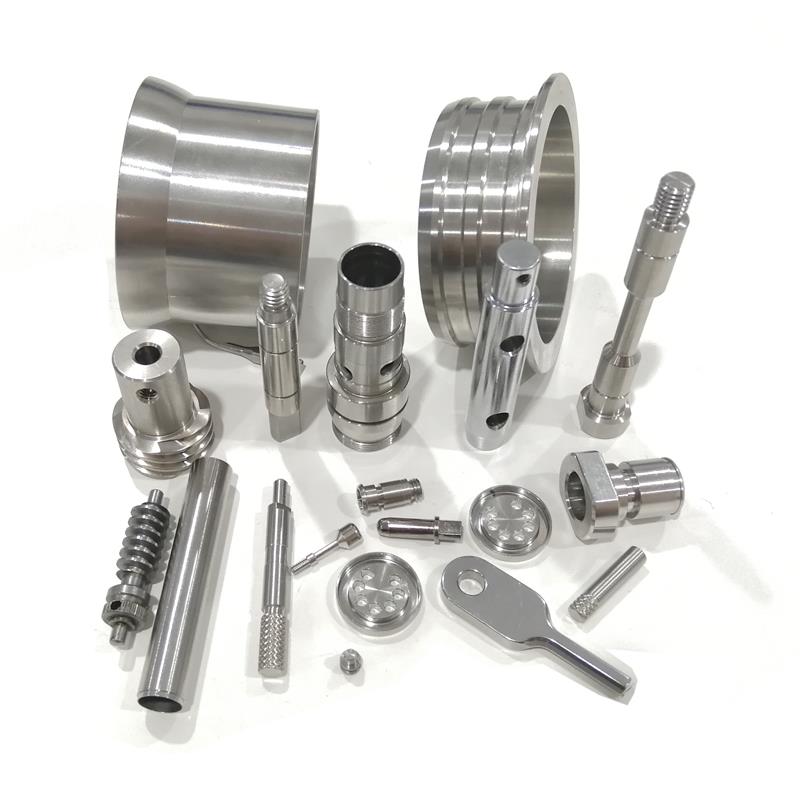
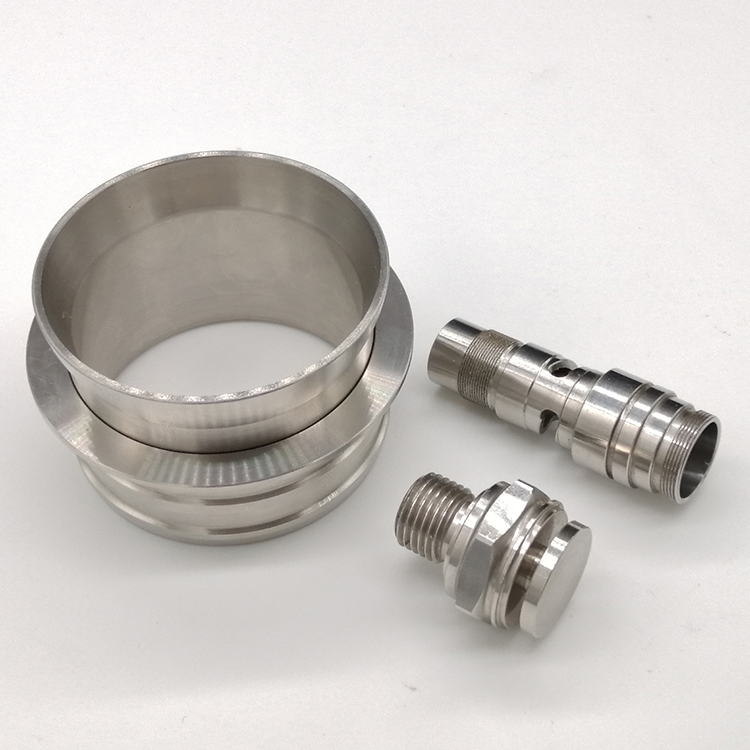

Compared with conventional machining, NC milling has the characteristics of high machining accuracy, machining of complex shape parts, and a wide machining range. According to the characteristics of CNC milling, we can roughly understand that suitable CNC milling parts mainly include the following types.
1, curve contour or surface of complex structure parts: parts of the plane curve contour, that is, parts with internal and external contour for complex curve, processing surface parallel or perpendicular to the horizontal plane. In three-dimensional coordinates, the surface of a part is usually a variation of points on the surface. It is usually designed by mathematical models. In the process of machining, the cutter and the machined surface always maintain point contact. 3 - axis CNC milling is usually used for machining surfaces of parts because it is necessary to program machining with the help of a CNC system.
2, ordinary milling difficult to process parts structure: for the size, marking, detection, and other difficult to observe and control parts, because the ordinary milling machine without CNC system auxiliary processing. So for these parts choosing CNC milling machine processing is very suitable
3, an ordinary milling machine can not achieve precision and accuracy: due to ordinary milling will exist human factors caused by the error, it is difficult to ensure the size accuracy, shape accuracy, and surface roughness of parts. Therefore, for parts with higher precision requirements, need to use CNC milling machine processing.
Bergek CNC is a world-class manufacturing service provider in Shenzhen. We have advanced equipment to provide a full range of customized products to manufacturers around the world, specializing in CNC machining and sheet metal processing.
If you have any question,please contact us.

Copyright © 2026 SHENZHEN BERGEK TECHNOLOGY CO., LTD. - www.bergekcnc.com All Rights Reserved.