One-stop solution for Sheet Metal Fabrication & CNC Machining - Bergek CNC
Language
One-stop solution for Sheet Metal Fabrication & CNC Machining - Bergek CNC
CNC turning refers to the method of turning the workpiece on the lathe relative to the tool. Turning is mainly provided by the workpiece rather than the tool. Turning is a basic and commonly used cutting method, which plays an important role in production.
Aluminium turned parts are precision CNC machined rotating components crafted through advanced turning techniques that enable the accurate shaping of internal and external cylindrical, conical, threaded, and grooved surfaces. These parts leverage the high-speed rotation of the workpiece against fixed cutting tools to achieve superior dimensional tolerance, smooth surface finish, and complex geometries with axial symmetry. The structural design and manufacturing process of aluminium turned parts ensure durability, lightweight performance, and compatibility for applications requiring custom shafts, fasteners, and intricate aluminum profiles.
Our company specializes in precision CNC aluminum turned parts, delivering custom-machined rotating components tailored to exact specifications. With advanced manufacturing capabilities and stringent quality control, we ensure high accuracy, durability, and reliability in every product. Committed to innovation and customer satisfaction, we support diverse industries by providing flexible solutions that enhance performance and efficiency. Our expertise in aluminum machining combined with a customer-centric approach guarantees timely delivery and competitive pricing. Partner with us for precision-engineered components that drive your success, backed by a proven track record of excellence and continuous improvement in CNC machining technology.
Our company specializes in precision CNC aluminum turned parts, delivering custom-machined rotating components with exceptional accuracy and reliability. Leveraging advanced manufacturing technology and skilled craftsmanship, we ensure every part meets stringent quality standards and exact client specifications. Committed to innovation and efficiency, we provide tailored solutions that enhance performance and durability across diverse industries. Our customer-centric approach emphasizes timely delivery, technical support, and continuous improvement, making us a trusted partner in precision machining. With a strong focus on quality, customization, and responsive service, we drive value and excellence in every component we produce.
CNC turning refers to the method of turning the workpiece on the lathe relative to the tool. Turning is mainly provided by the workpiece rather than the tool. Turning is a basic and commonly used cutting method, which plays an important role in production.
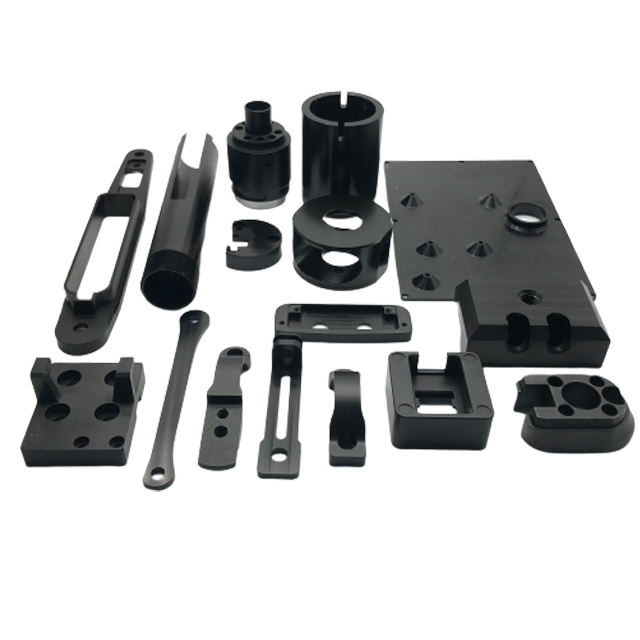
CNC turning workpiece is suitable for processing the rotating surface, most of the workpieces with the rotating surface can be processed by cutting methods, such as internal and external cylindrical surfaces, internal and external conical surfaces, end face, groove, screw and rotary molding surface, etc. In metal cutting machine tools, lathe application is very wide, accounting for about 50% of the total number of machine tools, turning workpiece with the tool, With the drill, hinge, tap, knurl drill, hinge, tap, knurl, according to the technological characteristics of the lathe, layout, and structural characteristics, lathes can be divided into horizontal lathes, landing lathes, vertical lathes, rotary lathes, and analog lathes, of which the horizontal lathes are mostly.
1. Different characteristics
Turning refers to lathe processing as a part of mechanical processing, the lathe mainly uses the turning tool to process the rotating workpiece, the lathe is mainly used for processing shafts, plates, jackets, and other rotating surfaces, is machinery manufacturing and repairing factory machine tool processing.
2. Different functions
Turning is a method of turning the workpiece through the tool rotation on the lathe, turning is mainly provided by the workpiece rather than the tool, milling center can be three-axis or multi-axis milling, used for processing mold, check, fetal, thin-wall complex surface, prosthesis, blade, etc., in the selection of CNC milling content, to give full play to the advantages of CNC milling and the key role.
The technology and application of CNC turning workpiece
Turning is a form of mechanical processing, is a material removal process, by removing unnecessary materials to process parts, turning needs a lathe, workpiece, fixture, and tool, the workpiece is fixed on the fixture's prefabricated material, and the fixture itself is fixed on the lathe, can rotate at high speed, turning tool is usually fixed on the machine tool, turning inside and outside cylindrical surface, The turning tool moves in the direction parallel to the rotation axis of the workpiece. When turning the end face or cutting the workpiece, the turning tool moves horizontally in the direction perpendicular to the rotation axis of the workpiece.
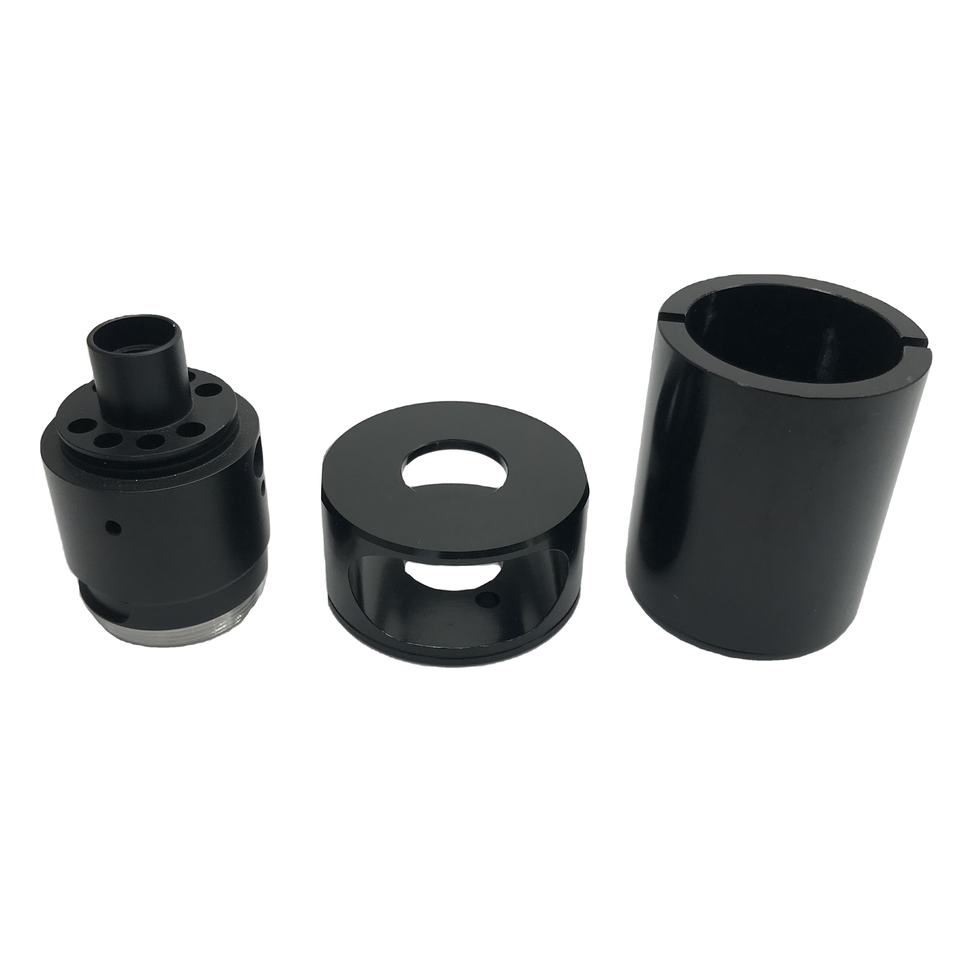
Turning is generally divided into rough turning and finish turning (including semi-finish turning), rough turning as far as possible to use large cutting depth and feed, without reducing the cutting speed to improve the efficiency of turning, semi-finish turning and finish turning as far as possible to use high-speed small feed and cutting depth, turning can provide higher tolerance and surface finish, This makes it ideal for adding precise rotation features to parts that already have a basic shape.
It is used for turning parts with various characteristics (usually axially symmetric parts), such as inner and outer cylinders, holes, slots, threads, taper, and steps of various diameters, etc. Parts manufactured entirely by turning usually include a limited number of parts, such as parts for product prototypes, custom shafts, fasteners, etc. Turning is also usually used as auxiliary processing. To add or improve the features of parts manufactured by different processes. For example, turning can be used for deep processing of aluminum tube products, such as turning threads on the inside or outside of aluminum tubes for assembly, or deep processing of aluminum profiles, such as chamfering or notching.
Thank you for watching. If you need to bring parts processing service, you can entrust our company. Ok, let's see you next time.
Bergek CNC is a world-class manufacturing service provider in Shenzhen. We have advanced equipment to provide a full range of customized products to manufacturers around the world, specializing in CNC machining and sheet metal processing.
If you have any question,please contact us.

Copyright © 2026 SHENZHEN BERGEK TECHNOLOGY CO., LTD. - www.bergekcnc.com All Rights Reserved.

